
Digital Marketing for Clinics: How to Get More Patients Using SEO, Google Ads & Social Media
Updated: Apr 21
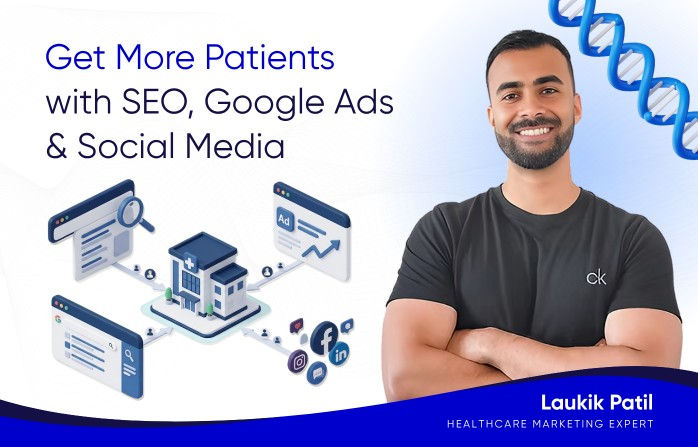
Digital marketing for clinics helps you get more patients by making your clinic easy to find online, easy to trust, and easy to contact. The fastest results usually come from Google Ads (high intent), while long-term growth comes from SEO + reviews + a strong Google Business Profile, supported by social media that educates and keeps you top of mind.
If you're a clinic owner, you don't need "more marketing." You need more of the right patients finding you, trusting you, and contacting your clinic.
Here's the simple truth: most patients start online. They see something (an ad, a post, a referral), then they Google your clinic, read reviews, look at photos, check your location and website, and only then decide if they'll call or book.
This guide explains digital marketing for clinics in the easiest way possible, what to do, why it works, and how the channels support each other so you can become the go-to clinic in your city.
For more information, you can check the video below.
Q1) What does "digital marketing for clinics" actually mean?
Digital marketing for clinics means using online channels to help real local people:
Find your clinic
Trust your clinic
Contact your clinic (call, form, booking, chat)
It usually includes:
Your website
Your Google Business Profile (GBP)
Reviews
SEO (local + organic)
Google Ads
Social media (education + credibility)
Basic tracking so you know what's working
A good clinic marketing strategy is not "doing everything." It's using each channel for its best job.
Get a clear, practical plan to attract the right patients using SEO, Google Ads, and social media. Talk to the LxP Digital today.
Q2) How do patients choose a clinic online?
Most patients follow a simple pattern:
They become aware of a clinic (ad, referral, social post, article)
They search your name on Google
They check trust signals (reviews, photos, location, services, website)
They compare options
They take action (call, message, book)
This is the real game: people don't just click, they verify. That's why healthcare digital marketing must be built around trust, not just traffic.
Q3) What is the "clinic marketing ecosystem" and why does it matter?
A clinic marketing ecosystem is when your channels work together instead of competing. Here’s the simplest way to think about it:
Facebook/Meta Ads → visibility (you get seen by the right people)
Google Ads → high intent (people actively searching for care)
SEO → trust + authority (you show up consistently in your area)
Social media → education + brand comfort (people feel they "know you")
When all four are aligned, patients experience you everywhere, which builds confidence. That's how clinics become the "default choice" in their city.
See how a connected digital marketing strategy can help your clinic grow with confidence. Book a free strategy call.
Q4) What should a clinic fix first before spending on marketing?

Before you run ads or push content, lock in the basics:
1) Google Business Profile foundation
Make sure your GBP has:
Correct clinic name, address, phone
Business category and services
Hours, appointment link, website link
Real photos (team, clinic exterior, rooms)
Frequent updates (posts/photos)
This is where many people decide if you're "real."
2) Review system (simple and consistent)
Reviews are trusted at scale.
Ask happy patients (in a compliant way)
Make it easy (QR code, short link)
Respond to reviews professionally
3) Website conversion basics
Your site should make it easy to:
Call you (phone visible on every page)
Book or request a consult
Understand services fast
Trust you (credentials, clinic photos, FAQs)
4) Tracking
At minimum:
Google Analytics + Search Console
Call tracking (optional but helpful)
Form tracking (so you know which channel works)
If your foundation is weak, you will pay more for every lead.
Q5) How does SEO help clinics get more patients?
SEO helps your clinic show up when people search for services in your area, and it builds trust over time.
You don't "buy" trust with SEO; you earn it by being the best answer online. Inside your main strategy, SEO for clinics works best when you focus on:
Local service pages (what you do + where you serve)
Helpful blog content that answers patient questions
Strong internal links between pages
Clear calls-to-action
Ongoing review growth + GBP strength
If you want to dominate your city long term, SEO is the asset.
Get expert guidance on SEO, Google Ads, and local visibility tailored to your clinic’s goals. Contact us today.
Q6) What is local SEO, and why is it different?
Local SEO is about ranking in:
Google Maps results
"Near me" searches
Local pack listings
It's strongly influenced by:
Your Google Business Profile quality
Review quantity + quality + freshness
Location signals (consistent listings)
Relevance (services clearly listed)
Your website's local content
That's why local SEO for clinics is not just "keywords." It's reputation + profile quality + location trust signals.
Q7) What type of content should a clinic publish to rank on Google?
To rank in AI Overviews and standard Google results, write content that is:
Clear
Specific
Helpful
Structured
The best-performing clinic content usually includes:
"What is…" pages (definitions)
"Symptoms and when to seek help" pages
"Treatment options" explanations
"What to expect" guides
"Cost/insurance/eligibility" guidance (careful and accurate)
FAQs that match real patient searches
You don't need fancy words. You need clear answers. And your pillar post should link out to deeper posts, like your cluster plan.
Let’s build a marketing ecosystem that helps patients find you, trust you, and choose you consistently. Schedule your appointment today.
Q8) How do Google Ads help clinics get more patients quickly?

Google Ads work because they capture people who are already looking for help.
When someone searches:
"TMS clinic near me"
"therapist in [city]"
"sleep apnea dentist [city]" …they are close to taking action.
In your ecosystem, Google Ads for clinics are your fastest lever for high-intent leads, if your landing page and trust signals are solid.
Common mistakes clinics make:
Sending ads to the homepage (too general)
Not tracking calls/forms
Not using negative keywords
Running ads without strong reviews/GBP
Q9) Which is better: Google Ads or SEO?
Most clinic owners ask this because they want a clear choice.
Here's the truth:
Google Ads is like renting attention.
SEO is like owning attention.
So the answer is:
If you need leads now → run ads
If you want long-term dominance → build SEO
If you want stability → do both in the right order
That's the practical reality of Google Ads vs SEO for clinics: one brings speed, the other builds authority that compounds.
Q10) Do Facebook (Meta) Ads work for clinics?
Yes, but for a different reason than Google Ads.
People on Facebook/Instagram are usually not searching for care at that moment. They're scrolling. That means Facebook Ads for clinics are best for:
Awareness
Education
Staying visible in your market
Driving traffic that later searches for you on Google
Meta ads often create the "I’ve seen this clinic before" effect, which increases trust when people later research you.
Common winning formats:
Short educational videos
Myth vs fact posts
"What to expect" content
Non-sensitive, general wellness education
Clinic introduction videos
Q11) How does social media help a clinic get more patients?
Social media doesn't always convert immediately. But it builds familiarity.
Patients choose clinics they trust, and trust often comes from:
Consistency
Clear explanations
Seeing the clinic and team
Feeling understood
That's why social media marketing for clinics should be less "sales" and more:
Helpful education
Simple answers to common questions
Clear service explanations
Behind-the-scenes credibility (team, training, environment)
Social proof (with consent)
A strong clinic social media strategy makes your clinic feel “known” before the first call.
Q12) What's the best "patient acquisition" plan for clinics?
Here's a simple plan you can actually follow:
Phase 1 (Weeks 1–2): Trust foundation
Optimize GBP
Add photos
Fix NAP consistency
Set up a review request system
Fix website contact + service clarity
Set up tracking
Phase 2 (Weeks 3–6): High-intent capture
Launch Google Ads to service pages
Track calls + forms
Improve landing pages based on results
Phase 3 (Months 2–6): Authority building
Publish helpful content consistently
Build internal links between service pages + blog
Grow reviews
Improve map rankings
Phase 4 (Ongoing): Expand awareness
Run Meta awareness campaigns
Post educational content weekly
Retarget carefully (and compliantly)
This is patient acquisition for clinics that is stable, not "one-hit marketing."
Q13) What should clinics measure to know if marketing is working?

Don't only track clicks. Track outcomes.
Start with:
Calls
Form submissions
Bookings
Cost per lead
Lead quality (are they the right patients?)
Show-up rate
Cost per booked consult (if you can measure it)
If you want to grow, treat marketing like a system, not a gamble.
Q14) What are the most common mistakes clinics make in digital marketing?
Running ads before trust is built
No reviews (or not enough recent ones)
Weak Google Business Profile photos/details
Sending traffic to the homepage
No tracking
Posting random content with no plan
Expecting SEO to work in 30 days
Talking like a marketer instead of talking like a clinician
You win by being clear, consistent, and trustworthy.
Q15) What's the simplest way to become the "#1 clinic" in your city online?
Be the clinic that shows up everywhere and looks trustworthy everywhere.
That means:
Your Google listing is complete and active
Your reviews are strong and recent
Your website is clear and easy to navigate
Your SEO makes you visible long-term
Your ads bring high-intent leads
Your social media educates and builds familiarity
This is exactly how a marketing ecosystem creates local dominance.
Quick checklist: Digital marketing for clinics (print this)
Google Business Profile fully optimized (details + photos + services)
Review request system running weekly
Website: clear services, strong CTAs, easy contact
Tracking installed (Analytics, Search Console, forms/calls)
Google Ads running to service pages (not homepage)
SEO content plan (service pages + blogs + FAQs)
Social media education posts (weekly)
Internal links between related topics (pillar → cluster)
FAQs
How long does SEO take for a clinic?
Usually, 3–6 months for meaningful movement, and 6–12 months for strong local dominance, depending on competition and consistency.
Are Google Ads worth it for clinics?
Yes, if your landing page, tracking, and trust signals are strong. If not, you'll pay more per lead.
What matters most for local clinic marketing?
Reviews, Google Business Profile quality, and clear service/location pages.
Should clinics post on social media even if it doesn't bring leads?
Yes, because it builds familiarity and trust, which supports conversions later.
What is the best clinic marketing strategy?
A system where each channel has a job: awareness, trust, intent capture, and education.
Conclusion
Digital marketing for clinics works best when it is treated as a connected system, not a set of isolated tactics. When SEO, Google Ads, social media, reviews, and your Google Business Profile support each other, patients find you easily, trust you faster, and contact you with confidence. Consistency, clarity, and trust are what turn visibility into real patient growth.
Ready to Build a Smarter Clinic Marketing System?
If you want the right patients to find, trust, and choose your clinic, it starts with a clear strategy. Get expert support from LxP Digital to build a strong clinic marketing ecosystem that drives steady patient acquisition and long-term growth.

Laukik Patil
Healthcare Digital Marketing Strategist
A results-driven healthcare digital marketing strategist helping clinics and healthcare brands grow their online presence. He specializes in SEO, local search optimization, content strategy, and data-driven marketing to increase visibility, attract qualified leads, and support sustainable business growth.


